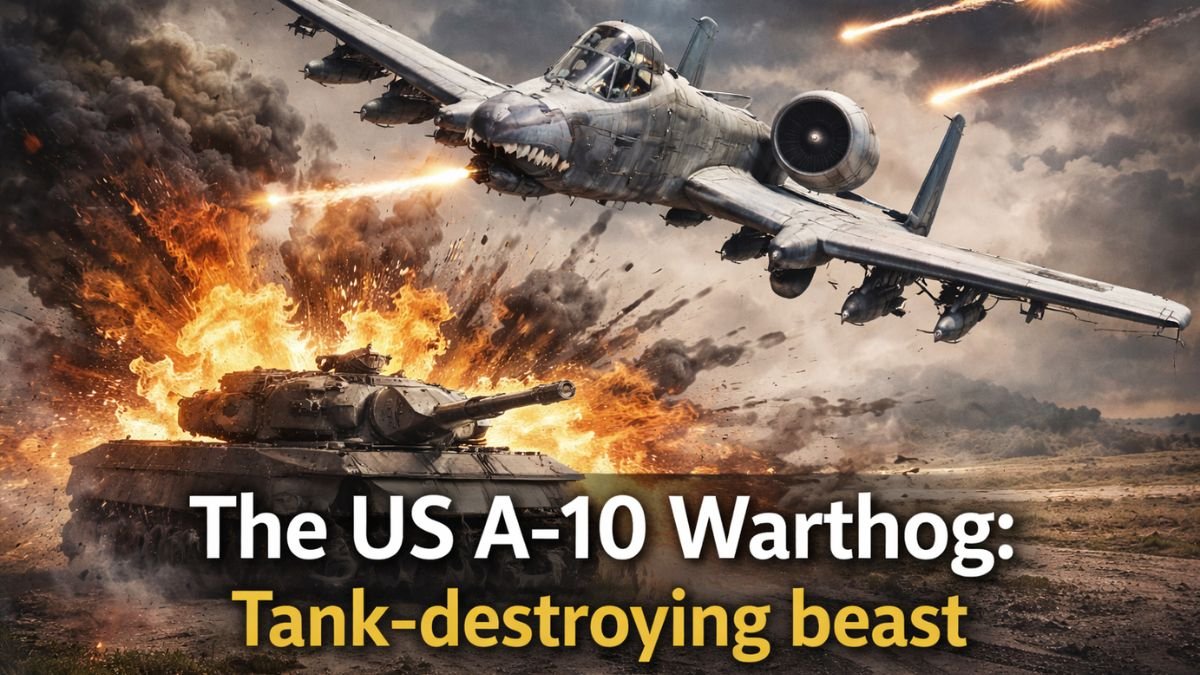
Few military aircraft inspire as much respect, debate, and admiration as the A-10 Warthog. Designed with a singular mission in mind, this aircraft is not about speed, elegance, or stealth. It exists for one purpose: to hunt and destroy enemy armor while protecting troops on the ground. Over decades of service, the A-10 has earned a reputation as one of the most feared tank-destroying aircraft ever built, a flying guardian angel for soldiers caught in the chaos of battle.
Born From the Demands of the Battlefield
The A-10 Warthog was born during the Cold War, a time when military planners feared massive armored advances across Europe. The United States needed an aircraft that could survive intense ground fire, operate close to friendly forces, and systematically dismantle enemy tanks. Speed and altitude were secondary concerns. Survivability, firepower, and precision were the priorities.
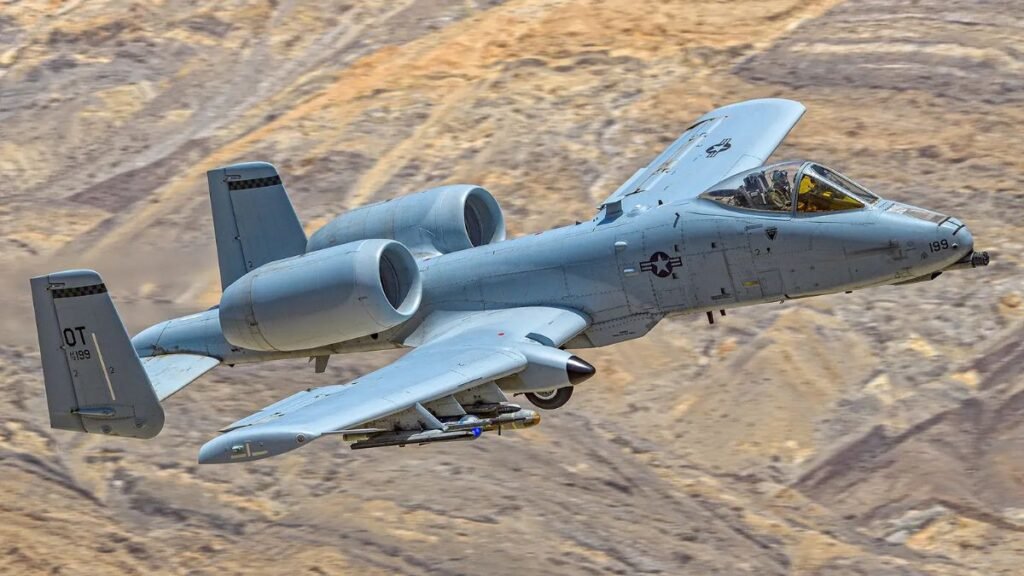
Engineers designed the aircraft from the ground up with this harsh reality in mind. Every element of the A-10 reflects battlefield pragmatism rather than aesthetics. Its bulky frame, straight wings, and exposed rivets give it a rugged, almost industrial look, perfectly suited to its role.
Why It’s Called the Warthog
The nickname “Warthog” was never official, but it stuck almost immediately. With its wide-set engines, blunt nose, and unmistakable silhouette, the aircraft resembles the tough, unglamorous animal it is named after. Pilots and ground crews embraced the nickname because it captures the jet’s personality: ugly by conventional standards, but incredibly effective and resilient.
This identity has helped the A-10 build a loyal following among those who have seen it operate in real combat. For troops on the ground, the sound of a Warthog approaching often signals relief.
A Flying Gun With Wings
At the heart of the A-10’s tank-destroying reputation is its massive cannon. The aircraft was literally built around this weapon, not the other way around. When the gun fires, the entire aircraft shudders from the force, unleashing a stream of armor-piercing rounds capable of ripping through tanks and fortified positions.
This weapon allows the A-10 to engage enemy armor with devastating accuracy. Unlike missiles, which are limited in number, the cannon gives the pilot sustained firepower, enabling repeated attack runs until the threat is eliminated.
Designed to Survive Heavy Fire
The A-10 is one of the most survivable combat aircraft ever built. Its cockpit is protected by a titanium “bathtub” that shields the pilot from ground fire. The aircraft’s systems are redundant, meaning it can continue flying even if one engine fails or hydraulic systems are damaged.
There are numerous real-world examples of A-10s returning to base despite suffering extensive damage. Wings torn by anti-aircraft fire, engines damaged, and control systems compromised—yet the aircraft kept flying. This ability to absorb punishment is central to its role as a close air support platform.
Close Air Support Like No Other
Close air support is one of the most dangerous missions in modern warfare. Pilots must fly low and slow, exposing themselves to enemy fire while operating near friendly troops. The A-10 excels in this role because it was designed specifically for it.
The aircraft’s slow speed and excellent visibility allow pilots to clearly identify targets, reducing the risk of friendly fire. This precision has saved countless lives on the ground, earning the A-10 deep respect among infantry units.
The Psychological Impact on the Battlefield
Beyond physical destruction, the A-10 has a powerful psychological effect. The sound of its cannon firing is unmistakable and terrifying to enemy forces. That distinctive roar often causes enemy units to scatter or abandon their positions.
For friendly troops, the same sound brings confidence. Knowing that a Warthog is overhead provides reassurance that help is close and that enemy armor can be neutralized quickly.
Combat History That Proved Its Worth
The A-10’s reputation was cemented during major conflicts, particularly in the Gulf War. In that conflict, the aircraft destroyed hundreds of enemy tanks, armored vehicles, and artillery pieces. Its ability to loiter over the battlefield and strike repeatedly made it a decisive asset.
In later conflicts, including operations in Afghanistan and Iraq, the A-10 continued to prove its value. While these wars involved fewer large tank formations, the aircraft adapted to new roles, targeting insurgent positions, vehicles, and fortified buildings.
Why Speed and Stealth Were Never the Goal
In an era dominated by stealth fighters and supersonic jets, the A-10 stands apart. It is neither stealthy nor particularly fast. This is not a flaw but a deliberate design choice.
The aircraft’s mission requires time over the battlefield, precision, and toughness. High-speed jets often struggle with these requirements. The A-10’s slower speed allows pilots to make careful attack runs, reassess the situation, and respond dynamically to requests from ground forces.
The Debate Over Retirement
Despite its proven record, the A-10 has faced repeated attempts at retirement. Critics argue that it is outdated and vulnerable to modern air defenses. Supporters counter that no other aircraft performs close air support as effectively or with the same level of trust from ground troops.
This debate reflects a broader question about modern warfare. As technology evolves, militaries must decide whether specialization still has a place alongside multi-role platforms. The A-10 represents specialization at its finest.
The Human Connection Between Pilot and Ground Troops
One of the most powerful aspects of the A-10’s legacy is the relationship between its pilots and soldiers on the ground. Pilots often communicate directly with forward air controllers, receiving real-time information about enemy positions and friendly movements.
This close coordination builds trust. Ground troops know that A-10 pilots are trained specifically to support them, not just to strike targets from afar. This human connection is difficult to replicate with more automated or high-altitude systems.
Maintenance and Simplicity as Strengths
The A-10 was designed to be maintained in rough conditions. Its systems are relatively simple compared to advanced stealth aircraft, allowing ground crews to keep it operational even in forward-deployed locations.
This simplicity translates into reliability. When troops need air support, the A-10 is often ready to fly, even from austere airfields close to the front lines.
The Role of the US Air Force
The aircraft has served proudly within the United States Air Force for decades. Its continued presence reflects not just tradition but operational necessity. While newer aircraft have joined the fleet, the A-10 remains unmatched in its specific mission set.
The Air Force’s challenge is balancing modernization with preserving proven capabilities. The Warthog sits at the center of this balancing act.
Adapting to Modern Warfare
Over the years, the A-10 has been upgraded with modern avionics, targeting systems, and communication tools. These upgrades allow it to integrate with contemporary battlefield networks and operate alongside advanced aircraft.
This evolution demonstrates that even a seemingly old design can remain relevant when adapted thoughtfully. The A-10’s core strengths—firepower, durability, and precision—remain unchanged.
Why Ground Troops Still Trust the Warthog
Trust in combat is earned, not given. The A-10 has earned that trust through consistent performance under fire. Soldiers who have experienced its support often describe it as a lifesaver, arriving when situations seemed most dire.
That trust is perhaps the aircraft’s greatest achievement. Technology can evolve, but the confidence of those it protects is priceless.
The Cultural Legacy of the A-10
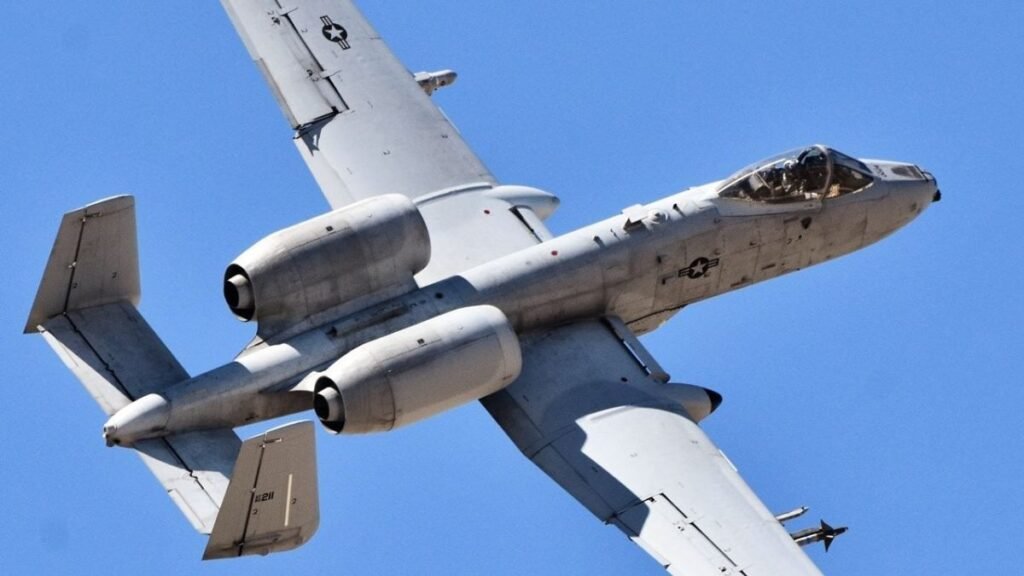
Beyond the battlefield, the A-10 has become a cultural icon. Aviation enthusiasts, veterans, and military historians often cite it as a symbol of function over form. It represents a philosophy of design that prioritizes mission success above all else.
This legacy ensures that the Warthog’s story will be told long after it eventually leaves service.
Final Thoughts on the Tank-Destroying Beast
The A-10 Warthog is not flashy, fast, or futuristic. It is something far more important: effective. Built to destroy tanks and protect ground forces, it has done exactly that for decades. Its brutal firepower, legendary durability, and close connection to troops on the ground make it one of the most respected aircraft in military history.
In a world of rapid technological change, the A-10 stands as a reminder that the best weapon is not always the newest one, but the one that does its job when lives depend on it.
FAQs
Q1. Why is the A-10 Warthog called a tank destroyer?
Because it was designed to hunt and destroy enemy tanks using its powerful cannon and armor-piercing weapons.
Q2. Is the A-10 Warthog still used today?
Yes, the A-10 is still in service and continues to support ground troops in combat missions
Q3. What makes the A-10 different from other fighter jets?
It focuses on close air support, heavy firepower, and survivability rather than speed or stealth.