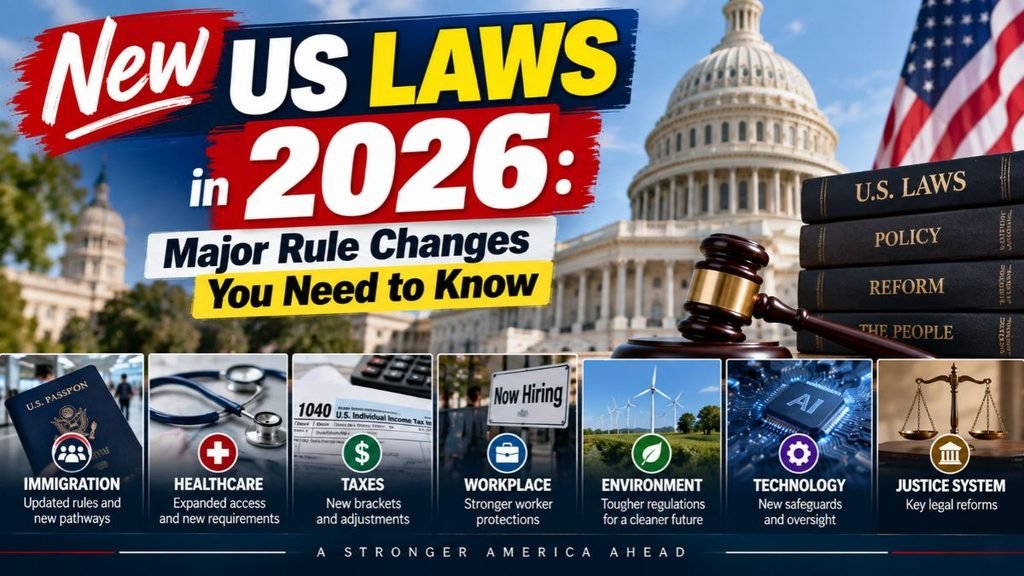
In 2026, the United States is seeing some pretty significant changes, to laws and regulations, all kinds of them. And yeah it could definitely affect the general public—like what people do when it comes to tax filing, healthcare services, employment rules, immigration, business operations, and even the day to day financial situation. What’s kind of tricky is that these changes aren’t all the same kind of thing either, some were rolled out via federal laws, and then others are basically fresh state-level rules and regulations. So when you look at the “New US Laws in 2026” you really have to keep in mind, that not every rule is applied uniformly everywhere, across the whole country.
Major Changes to Tax Rules in 2026
Federal tax rules are among the most significant changes in 2026, honestly it’s kind of a big deal for a lot of people. The provisions linked to the “Working Families Tax Cuts” have shifted how deductions work and how tax calculations are figured for many taxpayers, not just a tiny tweak. The IRS notes that for the 2026 tax year the standard deduction is $32,200 for married couples filing jointly, $16,100 for single filers, and $24,150 for heads of household. Also there are provisions like new deductions connected to qualified tips and overtime compensation, plus additional deductions for seniors. So yeah, in 2026 employees and families should not fall back on older tax guidance when they’re estimating their income and what can be deducted.
New Tax Benefits Regarding Tips and Overtime
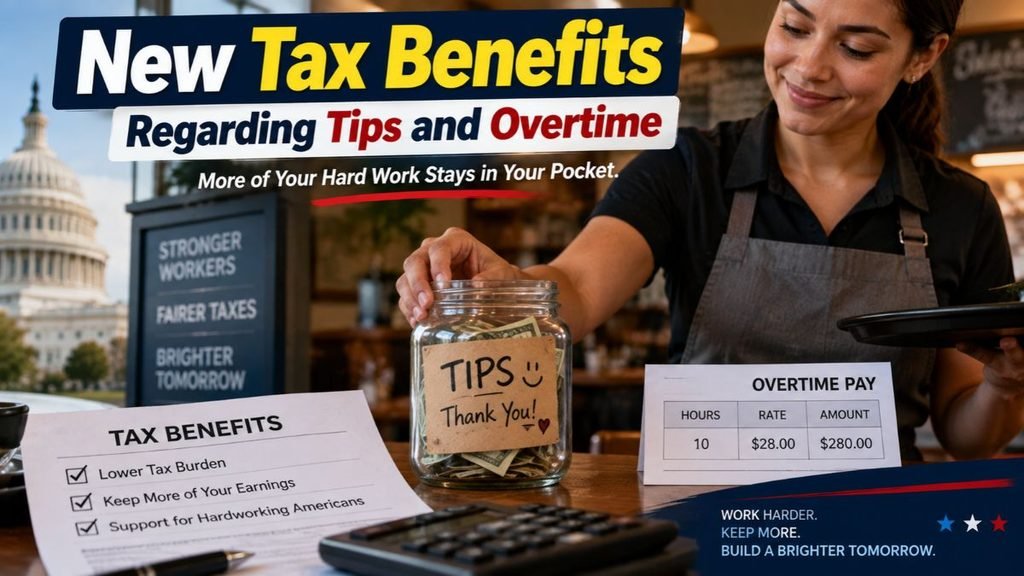
Tax changes about tips and overtime pay for workers is also a big topic in 2026. New federal tax provisions might bring deduction benefits for some qualifying workers, tied to eligible tips and overtime compensation, in a way that sounds nice on paper but still has rules. Still, this does not mean that every tip, or overtime check, automatically becomes tax free. Lots of conditions apply, like whether you actually qualify, income limits, and which regulations are in play. So, employees should take a close look at their pay statements, and their tax documents too, to figure out which part of their income counts for a deduction.
Changes to Healthcare and Medicaid Rules
In the healthcare sector, there’s also a bunch of policy changes coming through in 2026. Some adjustments to specific Medicaid and other healthcare-related rules have been rolled out under the “Working Families Tax Cuts” legislation, so yeah it’s not just one tweak. The Congressional Budget Office says the law boosted work related incentives within Medicaid, and also added some limits, for eligibility when it comes to Affordable Care Act marketplace premium tax credits. What it really means in practice, could shift quite a bit depending on a person’s income, their eligibility situation, and how the state handles its own rules.
Significant Changes to Immigration Rules
Immigration is still an area that seems to be changing very fast in 2026. Notices connected to immigration, from the Department of Justice have brought in new provisions, about asylum fees , work authorization , and a few other immigration procedures that people don’t always expect. Like for example, DHS put out a new final rule touching “public-charge” regulations , and it has an effective date of September 18, 2026. Also, admission rules for certain student and exchange visitor categories have been proposed, and some parts are already finalised, depending on the case. So in the end it really matters that immigrants and visa applicants check the most recent official requirements for their own category, instead of leaning on older rules that were written for a different time, and honestly they may no longer fit.
State Laws Are Also Bringing Major Changes
Legislative developments in 2026 aren’t just about federal rules that originate in Washington, D.C. , either. A lot of individual states are rolling out new laws too, and sometimes they hit in ways people don’t expect. For instance, after the 2026 legislative session Arizona put in place new regulations dealing with driver’s licence photos, homeowners’ associations, drones, distracted driving , and also the marketing of vaping products . California has similarly introduced fresh laws tied to children’s online safety, social media, and AI chatbots. So basically, the rules that apply to a person can end up hinging on the state where they reside, not just the federal level .
What Is the Potential Impact on Businesses and Employers?
In 2026, regulatory changes are starting to affect businesses too. Beyond the usual tax rule adjustments , there are other moves in federal policies around labour, healthcare, environmental rules, immigration, and technology too. So, even if some companies might get new reporting expectations or added compliance duties, there are also actions being taken in some industries to ease regulation, at least a bit. Because of that, employers really need to keep an eye on federal laws but also on state rules, plus any industry-specific regulations, not just one side of it.
Why Is It Important to Understand the 2026 Rules?
Law changes can really mess with your finances, benefits, your work, business matters and even what legal duties you have. Still, it’s usually not correct to treat every news headline as a “brand new law”. Sometimes it’s only a proposed rule, sometimes it’s a final rule, and sometimes it’s changed later or even stopped, because of legal challenges. In 2026, multiple regulatory actions are already being fought in court , so it’s wise to check the most recent status from an official government website before you make any big financial choice or legal decision.
Conclusion
The year 2026 is proving to be sort of meaningful in the United States when it comes to laws and rules. Things are shifting across different areas, like tax deductions and benefits, healthcare, Medicaid, immigration, business regulations, plus state level rules too. And because the effect won’t land the same on every individual, it probably isn’t smart to use a generic list as the ultimate solution for your own legal or financial setup. If a new rule could touch your taxes, benefits, immigration status, job situation, or your business operations, the safest move is to lean on official government guidance, and also seek counsel from qualified professionals.
FAQs
Q1. What are the major new US laws in 2026?
A. Major changes include updates to taxes, healthcare, immigration, employment, and state regulations.
Q2. Will the new 2026 laws affect everyone?
A. Not necessarily. The impact depends on your state, income, job, and personal circumstances.
Q3. Where can I check the latest US law changes?
A. Check official federal and state government websites for the most current information.