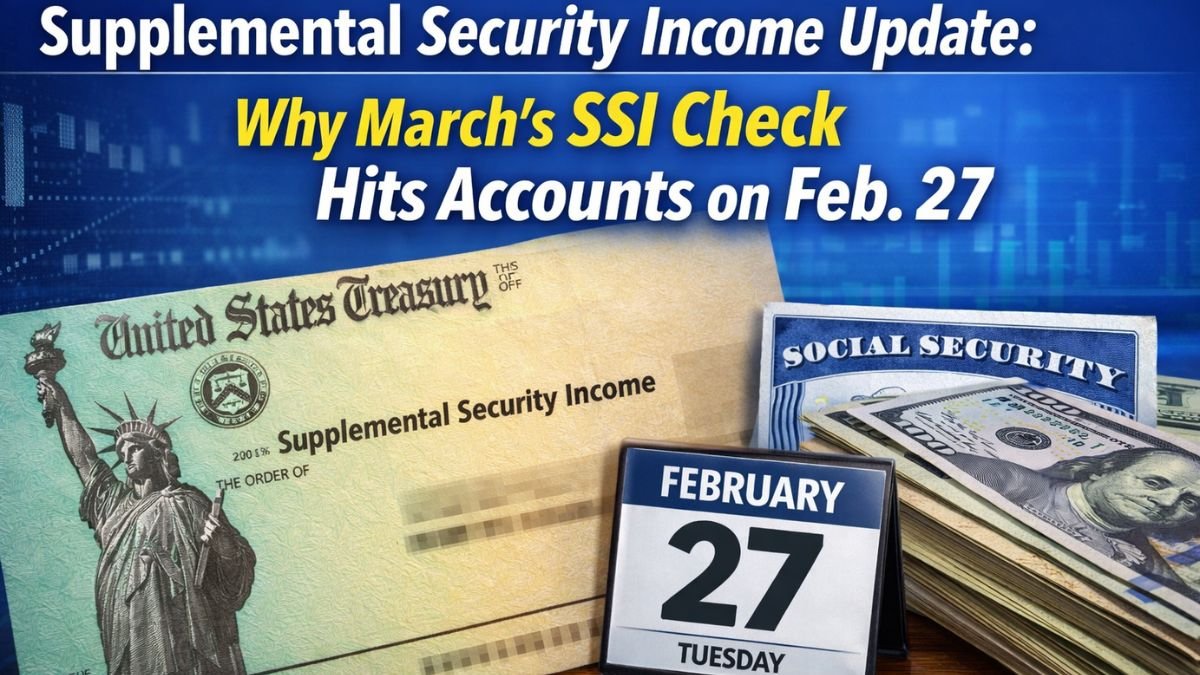
For millions of Americans who depend on Supplemental Security Income, payment dates are not just calendar details—they are essential to daily life. Rent, groceries, medications, and utilities are often planned around when an SSI check arrives. That is why many recipients are paying close attention to the March payment schedule this year, especially after learning that March’s SSI check will hit accounts early, on February 27. While this may initially seem confusing, there is a clear and logical reason behind the shift, and understanding it can help beneficiaries plan with confidence.
The early payment is not a bonus or an extra check, but rather a scheduling adjustment made to ensure that recipients receive their money on time. Each year, similar adjustments occur, and they are part of how the system works rather than a sign of policy change. Still, for those who rely on SSI to meet basic needs, knowing exactly why this happens and what it means is extremely important.
Understanding What Supplemental Security Income Is
Supplemental Security Income, commonly known as SSI, is a federal program designed to support individuals with limited income and resources. It primarily serves older adults, people with disabilities, and individuals who are blind. Unlike Social Security retirement or disability benefits, SSI is funded through general tax revenues rather than payroll taxes.
Because SSI supports some of the most financially vulnerable people in the country, payment reliability is a top priority. Even small delays can create serious hardships. That is why the payment schedule is carefully structured and why adjustments are made when necessary to avoid interruptions.
Why SSI Payments Follow a Unique Schedule
SSI payments are typically issued on the first day of each month. This predictable timing helps recipients manage expenses and budget effectively. However, when the first day of the month falls on a weekend or a federal holiday, payments are issued earlier. This rule exists to make sure funds are available when banks are open and able to process deposits.
In the case of March, the first day of the month falls on a weekend. Since banks do not process deposits on weekends, the payment is moved to the last business day before the month begins. That is why March’s SSI check arrives on February 27 instead of March 1.
The Role of the Social Security Administration
The payment schedule for SSI is managed by the Social Security Administration, which oversees multiple benefit programs across the country. The agency follows strict guidelines to ensure payments are delivered in a timely and predictable manner.
These early payments are not new or unusual. They happen several times each year depending on how the calendar falls. The goal is always the same: to ensure beneficiaries have access to their money without delay, even if the official payment date lands on a non-business day.
Why March’s SSI Check Arrives on February 27
The key reason for the February 27 payment is timing. Since March 1 falls on a weekend, the SSI payment is moved to the previous business day. February 27 is the last weekday before March begins, making it the appropriate date for the deposit.
This adjustment ensures that recipients are not left waiting until after the weekend to access funds. While it may feel early, it is still considered the March payment, not an extra or advance check. Understanding this distinction is crucial for budgeting and financial planning.
Does an Early Payment Mean Extra Money
One of the most common questions recipients ask is whether an early payment means they are receiving extra money. The answer is no. The amount of the SSI payment remains exactly the same. The only thing that changes is the date it is deposited.
This is still the March SSI payment, simply delivered ahead of schedule. There will not be another SSI payment issued in March itself, since the obligation for that month has already been met with the February 27 deposit.
How This Early Payment Affects Monthly Budgeting
While receiving money early can feel helpful, it also requires careful planning. Because there will be a longer gap between payments, recipients need to make sure the February 27 deposit lasts through all of March. This can be challenging, especially for those living on very tight budgets.
Understanding the payment schedule ahead of time allows recipients to plan more effectively. Paying major bills, setting aside funds for essentials, and avoiding unnecessary spending early in the month can help prevent financial stress later on.
Direct Deposit Versus Paper Checks
Most SSI recipients receive their payments through direct deposit, which is the fastest and most reliable method. For those using direct deposit, the funds are typically available as soon as the bank processes the payment on February 27.
Recipients who still receive paper checks may experience slight delays depending on mail delivery times. However, the check is still issued on the adjusted payment date, ensuring it is sent out before the weekend. This is one reason why many beneficiaries choose to switch to direct deposit if possible.
Common Confusion Around Early SSI Payments
Early payments often cause confusion, especially for new recipients or those who do not closely follow the payment calendar. Some worry that they have been paid incorrectly or that future payments may be affected. Others fear that benefits are being reduced or changed.
In reality, early payments are a routine part of SSI administration. They do not signal any change to eligibility rules, benefit amounts, or program funding. They are simply calendar-based adjustments designed to keep payments consistent and accessible.
How Often Do Early SSI Payments Happen
Early SSI payments occur several times each year, depending on how weekends and holidays fall. Months like January, March, and October are especially likely to see adjusted payment dates. This pattern is predictable and published in advance, allowing recipients to prepare.
Reviewing the annual payment schedule can help beneficiaries avoid surprises. Knowing when payments will arrive early makes it easier to manage expenses and avoid running short toward the end of the month.
What This Update Does Not Change
It is important to understand what this update does not affect. The February 27 deposit does not change SSI eligibility requirements, income limits, or benefit calculations. It does not impact other Social Security benefits such as retirement or SSDI.
This update also does not reflect any policy shift or reform. It is purely a scheduling matter. Recipients continue to receive the same support they are entitled to under existing rules.
Why Clear Communication Matters for SSI Recipients
Because SSI recipients often live on fixed incomes, even small misunderstandings can cause anxiety. Clear communication about payment dates helps reduce stress and allows people to plan responsibly. Knowing why a payment arrives early prevents unnecessary worry about missed or delayed checks.
Updates like this highlight the importance of staying informed through official notices and reliable sources. When recipients understand how and why scheduling changes occur, they are better equipped to manage their finances confidently.
Planning Ahead for the Rest of the Year
The February 27 payment is a reminder that SSI schedules are influenced by the calendar. Looking ahead to future months can help recipients anticipate similar adjustments. Keeping a simple calendar or reminder system can be especially helpful.
By planning for months with early payments, recipients can spread expenses more evenly and avoid financial strain. Awareness is one of the most effective tools for financial stability when living on a fixed income.

The Bigger Picture of SSI Reliability
Despite occasional scheduling adjustments, SSI remains a reliable source of support for millions of Americans. The program is designed to ensure that those with the greatest need receive consistent assistance. Early payments are part of that reliability, not a disruption to it.
While no system is perfect, the structured approach to payment scheduling reflects a commitment to ensuring that beneficiaries are not left without funds due to weekends or holidays.
Final Thoughts on the February 27 SSI Payment
The early arrival of March’s SSI check on February 27 may raise questions, but it is ultimately a practical and necessary adjustment. It ensures that recipients receive their money without delay, even when the calendar creates challenges.
Understanding that this is still the March payment, not an extra one, helps beneficiaries plan wisely and avoid confusion. With a little preparation and awareness, recipients can navigate this schedule change smoothly and continue to rely on SSI as a stable source of support throughout the year.
FAQs
Q1: Why is the March SSI payment arriving on February 27?
Because March 1 falls on a weekend, the Social Security Administration issues the payment on the last business day before the month begins.
Q2: Is the February 27 deposit an extra SSI payment?
No, it is not extra money. It is the regular March SSI payment sent early due to the calendar.
Q3: Will there be another SSI payment in March?
No, there will not be a separate payment in March since the benefit for that month is already paid on February 27.